
%20(1).svg "fdic-digital-sign-white (4) (1)")


Learn how to enter the self-storage industry by building a facility, buying an existing operation, or choosing a franchise, and what lenders review.
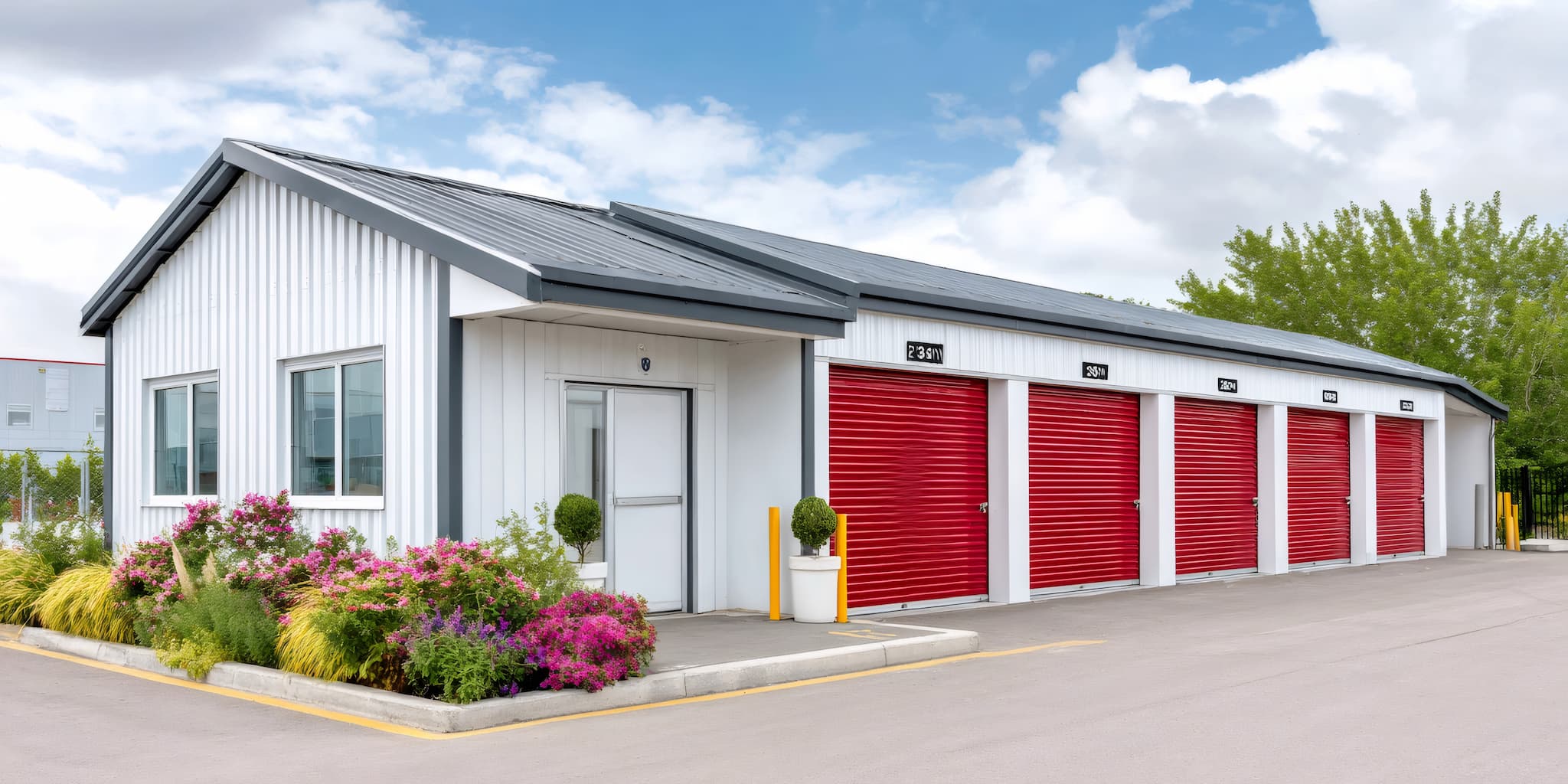
Getting into the self-storage industry starts with one important decision: Will you build a new facility, buy an existing operation, or work within a franchise system?
Each path can lead to business ownership, but the capital requirements, timeline, operating responsibilities, and risks can look very different. Building gives you more control over the property and facility design. Buying may provide existing customers and financial history. Franchising can offer a defined operating system, but it also brings fees, contractual obligations, and brand requirements.
One clarification upfront: a franchise is not always a separate real estate path. A self-storage franchisee may still need to build a facility, acquire an existing one, or convert an independent property to the franchise brand.
The right path depends on your available capital, experience, target market, desired timeline, and willingness to manage development or acquisition risk.
Start by Understanding the Self-Storage Business
From the outside, self-storage can look like a straightforward real estate investment. In practice, owning a facility usually involves much more than collecting rent.
- Local marketing and customer acquisition
- Rental pricing and promotions
- Tenant onboarding and customer service
- Billing, delinquency management, and collections
- Security systems and property access
- Repairs and facility maintenance
- Employees or third-party vendors
- Insurance and financial reporting
- Facility software and online rental systems
- State and local compliance requirements
Technology can automate parts of the business, and an owner may hire a third-party manager. However, the owner still needs to understand how the facility will be operated, who will make major decisions, and how performance will be monitored.
That distinction can also matter when financing is involved. SBA loan programs are intended for eligible operating businesses, while federal rules generally exclude passive businesses owned by developers or landlords that do not actively use or occupy the financed assets. For that reason, a self-storage project’s operating model, ownership structure, and management arrangement should be reviewed early rather than assumed to be eligible. See the SBA 7(a) loan program overview for general eligibility information.
Three Ways to Enter the Self-Storage Industry
| Entry path | Potential advantage | Primary challenge | Often fits owners who… |
|---|---|---|---|
| Build from scratch | Control over the site, design, technology, and unit mix | Zoning, construction, cost overruns, and lease-up risk | Can wait through development and want to create a facility for a specific market |
| Buy an existing facility | Existing tenants, financial history, and infrastructure | Purchase-price risk, deferred maintenance, and operational due diligence | Want a potentially faster transition into ownership |
| Choose a franchise | Brand standards, training, technology, and operating support | Franchise fees, restrictions, and continuing obligations | Prefer a structured system and are comfortable following brand requirements |
Option 1: Build a Self-Storage Facility From the Ground Up
Building a facility gives you the greatest degree of control. You may be able to select the market, site, building configuration, unit sizes, security systems, technology, and customer experience.
That control comes with more steps before the business begins generating revenue.
Start With Demand, Not Land
An available parcel does not automatically make a strong self-storage site. Before committing to land, study whether the surrounding market can support another facility.
Avoid relying on one market statistic or a broad industry average. Demand can vary significantly between neighborhoods, even within the same city.
Evaluate the Site Carefully
Once the market appears promising, determine whether the site can actually support the project.
Local planning officials, engineers, architects, environmental consultants, and land-use counsel can help identify problems before you make a substantial financial commitment.
Plan the Facility Around the Market
Your unit mix should reflect local demand, not simply personal preference.
Depending on the market, the facility could include climate-controlled units, drive-up units, multistory space, indoor loading areas, vehicle storage, or a combination of options. Security, lighting, fire protection, accessibility, online rental technology, and payment systems also need to be included in the design.
Build a Complete Development Budget
A realistic self-storage development budget includes more than land and construction.
It is also important to model the lease-up period—the time required to attract tenants and build recurring revenue. Your projections should account for pricing, promotions, delinquency, payroll, marketing, maintenance, and the cash needed to operate before the facility reaches a sustainable level of performance.
Potential Advantages and Challenges
Building may be appropriate when you have identified an underserved market, have sufficient liquidity, and are prepared to coordinate a multi-stage project.
The potential advantages include control, new building systems, and a facility tailored to your market research. The challenges include zoning uncertainty, construction delays, cost increases, and the absence of an existing customer base.
Option 2: Buy an Existing Self-Storage Facility
Buying an existing facility can provide a faster route into operations. Instead of waiting for construction and lease-up, you may acquire a property with tenants, employees, systems, and operating records already in place.
The tradeoff is that you are also buying the facility’s history—including any problems that are not immediately visible.
Decide What Type of Facility You Want
Existing facilities generally fall into three broad categories:
-
Stabilized facilities have established tenants and relatively consistent financial performance.
-
Value-add facilities may offer opportunities to improve pricing, marketing, occupancy, security, technology, maintenance, or unit configuration.
-
Turnaround facilities may have serious financial, operational, legal, or physical challenges.
A lower asking price does not necessarily make a turnaround facility less expensive. Deferred maintenance and weak operations can require significant capital after closing.
Verify the Financial Performance
Do not rely only on a seller’s summary or advertised occupancy rate.
Pay particular attention to the difference between physical occupancy and collected revenue. A facility can appear full while offering heavy discounts, charging below-market rents, or carrying significant delinquent balances.
Seller adjustments and add-backs should also be verified. A claimed “one-time” expense may turn out to be a recurring cost the new owner will continue to incur.
Review the Real Estate and Facility Condition
The business records are only part of the review. The real estate may require its own due diligence.
Evaluate the condition of roofs, doors, paving, drainage, gates, cameras, lighting, elevators, climate-control systems, and fire-protection equipment. Buyers should also review title, survey, zoning, permitted use, access, environmental conditions, property taxes, insurance availability, and potential expansion space.
A facility with strong historical cash flow may still require substantial post-closing improvements.
Validate the Market Independently
Historical performance does not tell you everything about future competition.
Research facilities that recently opened, projects under construction, and locations moving through local approval processes. Compare rents, promotions, unit types, technology, and property condition across the market.
The seller may have completed a market study, but the buyer should conduct an independent review.
Prepare for the Ownership Transition
A clear transition plan can help protect customer relationships and reduce operational disruption.
Avoid assuming that every operating change can be made immediately. Large rent increases, system conversions, staffing changes, or new collection practices may need to be phased in thoughtfully.
Potential Advantages and Challenges
Buying may fit an owner who wants an operating history and is prepared to analyze both a business and a commercial property.
Existing tenants and infrastructure can reduce startup uncertainty. However, the buyer must be prepared to identify deferred maintenance, weak records, understated expenses, seller-dependent relationships, and new competition that may not appear in historical financial statements.
Option 3: Enter Through a Self-Storage Franchise
A franchise can provide branding, training, technology, operating procedures, marketing support, vendor relationships, and other resources.
It does not eliminate the need to validate the market or the real estate. Depending on the franchise system, you may still need to develop a new property, acquire a facility, or pay to convert an existing operation.
Understand What the Franchise Provides
Franchise support varies. Before making a decision, determine what is actually included.
The franchise may not provide land, financing, a completed facility, or day-to-day management. It also cannot guarantee that a particular site will perform as projected.
Review the Franchise Disclosure Document
Under the FTC’s Franchise Rule1, a franchisor generally must provide a Franchise Disclosure Document containing 23 categories of information. A prospective franchisee must generally receive it at least 14 days before signing an agreement or paying the franchisor or one of its affiliates.
Any sales or earnings claims should be evaluated against Item 19. Item 20 can help you identify current and former franchisees to contact, while Item 21 provides financial information about the franchisor. The FTC’s Franchise Disclosure Document overview2 explains these sections in more detail.
An experienced franchise attorney and accountant can help you understand the contractual and financial implications. That review is separate from the lender’s underwriting and should not be treated as legal or tax advice from the lender.
Investigate the Full Cost
The franchise fee may be only one piece of the total investment.
Other costs may include royalties, advertising contributions, technology fees, training expenses, required vendors, facility upgrades, design standards, opening marketing, renewal fees, and future renovation requirements.
Speak with both newer and experienced franchisees. Ask what the project actually cost, which expenses exceeded expectations, how useful the support has been, and what they would do differently.
Check SBA Franchise Requirements Early
When SBA financing is being considered, the lender will review the franchise arrangement and the current SBA Franchise Directory3. Placement in the directory helps lenders evaluate eligibility, but it is not an SBA endorsement of the brand and does not predict whether the business will succeed.
This review should happen before you make nonrefundable payments or rely on SBA financing as part of the project.
Potential Advantages and Challenges
A franchise may make sense when you value a structured operating model and want support filling specific experience gaps.
The potential benefits include established systems, training, and brand standards. The challenges include initial and continuing fees, operating restrictions, required vendors, territory provisions, and dependence on the quality of the franchisor’s support.
Build, Buy, or Franchise: Which Path Fits You?
Consider building when you want control over the location and facility design, have time to manage development, and can support the business through construction and lease-up.
Consider buying when you want an operating history, are comfortable reviewing financial and property records, and have identified a facility at a supportable price.
Consider franchising when you value training and defined systems, understand the complete fee structure, and are comfortable operating within brand requirements.
How to Finance a Self-Storage Business
Self-storage financing may include conventional bank financing, SBA-backed financing, borrower equity, investor capital, seller financing, or a combination of sources.
Start by preparing a complete project budget. Depending on the transaction, that may include the purchase price, real estate, construction, improvements, equipment, security systems, professional fees, closing costs, franchise expenses, contingency funds, and working capital.
SBA 7(a) Financing
Quick clarification: the SBA generally is not the lender writing the check. A participating lender makes the loan, and the SBA guarantees a portion of it.
Eligible SBA 7(a) loan4 proceeds can generally be used for acquiring or improving real estate, working capital, equipment, furniture and fixtures, changes of ownership, and eligible multipurpose transactions. The business must meet SBA eligibility requirements and demonstrate a reasonable ability to repay.
For a self-storage project, eligibility will depend on the borrower, operating structure, management arrangement, project, and lender underwriting. Not every facility or ownership model will qualify.
SBA 504 Financing
The SBA 504 loan program5 is generally focused on eligible major fixed assets, including real estate, construction, renovations, and certain long-term equipment. A Certified Development Company participates in the financing structure alongside a senior lender.
The program cannot be used for ordinary working capital or inventory, and it does not finance speculative or investment rental real estate. The operating model and property use therefore need to be reviewed carefully.
Equity and Liquidity
An equity injection may often begin around 10%, but it can be higher depending on the transaction. Startups, construction, special-purpose properties, changes of ownership, limited experience, and other risk factors may affect the required contribution.
The lender may also evaluate whether you will have sufficient liquidity after closing. Cash reserves can be particularly important when a project faces slower lease-up, unexpected repairs, higher construction costs, or increased insurance and property-tax expenses.
What Will a Lender Review?
Although every transaction is different, lenders will generally evaluate five areas:
- The borrower: Credit history, liquidity, equity contribution, experience, and other financial obligations.
- The market: Competition, rates, demand, development activity, and the quality of the feasibility work.
- The project: Site control, zoning, construction plans, purchase terms, property condition, or franchise requirements.
- Repayment ability: Historical or projected cash flow, operating expenses, debt payments, and sensitivity to slower performance.
- Management: Who will run the facility, make major decisions, supervise employees, and maintain financial control.
A strong project is not based on one favorable number. The lender will want to understand how the borrower, facility, market, and financing structure work together.
A Practical First 90 Days
Days 1–30: Define the Strategy
During the first 30 days, define your ownership goals, available capital, target market, desired timeline, and preferred level of involvement.
Days 31–60: Test the Options
During days 31 through 60, test each viable path. Screen development sites, review acquisition opportunities, request franchise documents, and begin preliminary conversations with lenders and advisors.
Days 61–90: Select and Prepare
During days 61 through 90, narrow the options. Build a preliminary budget, identify professional due diligence needs, prepare a management plan, and discuss financing before signing binding agreements.
Common Mistakes to Avoid
-
Treating the business as completely passive. Even with automation or third-party management, ownership requires financial and operational oversight.
-
Buying land before validating demand. A low land price cannot overcome weak demand, poor access, difficult zoning, or excessive competition.
-
Underestimating working capital. Construction interest, payroll, insurance, marketing, repairs, and slower lease-up can increase the amount of cash required.
-
Focusing only on occupancy. Collected revenue, discounts, delinquency, expenses, and unit-level pricing may provide a more complete picture.
-
Relying exclusively on seller or franchisor projections. Complete your own market, financial, and property review.
-
Signing agreements before reviewing financing. Purchase, construction, franchise, and management agreements can affect the financing structure and eligibility.
Why Self-Storage Lender Experience Matters
A self-storage transaction may combine business lending, commercial real estate, construction, acquisition, market feasibility, franchise review, appraisal, environmental requirements, and SBA eligibility.
That is why early lender involvement matters. An experienced lender can help identify structural concerns before you invest substantial time or make nonrefundable commitments.
First Bank of the Lake is a nationwide SBA Preferred Lender with experience navigating commercial real estate, business acquisitions, franchises, construction, and complex SBA loan structures. Its relationship-driven approach is designed to provide clear expectations and help borrowers understand how the financing process may apply to their specific projects.
Take the Next Step Into Self-Storage Ownership
Building, buying, and franchising can each provide a path into the self-storage industry. The right choice depends on your capital, experience, market, timeline, and appetite for development or acquisition risk.
Before committing to a site, facility, or franchise, build a complete project budget and speak with experienced advisors. Early preparation can help you evaluate whether the project is realistic and whether SBA financing may fit the transaction.
Frequently Asked Questions
1. How much money do you need to start a self-storage business?
There is no universal amount. The total investment depends on whether you build or buy, the facility size, land and construction costs, required improvements, franchise fees, working capital, and lender requirements.
In addition to the initial investment, plan for contingency funds and post-closing liquidity.
2. Is it better to build or buy a self-storage facility?
Building gives you more control over the location, design, unit mix, and technology, but it introduces zoning, construction, and lease-up risk.
Buying may provide immediate operations and financial history, but you must verify the quality of the earnings, property condition, market position, and seller’s records.
3. Can an SBA loan be used for a self-storage business?
Potentially. A self-storage project may be eligible depending on its operating model, ownership and management structure, property use, borrower qualifications, and the overall transaction.
Eligibility should be reviewed by an experienced SBA lender before the borrower relies on SBA financing.
4. Is self-storage considered a passive business?
It depends on how the facility is owned and operated. Self-storage may involve active responsibilities such as pricing, marketing, tenant service, collections, security, maintenance, and employee or vendor oversight.
Because SBA rules generally restrict passive real estate businesses, the lender will need to understand the complete operating and management structure.
5. Is SBA 7(a) or 504 financing better for self-storage?
The SBA 7(a) program may offer more flexibility for an eligible acquisition or multipurpose project because it can include working capital and other business costs.
The 504 program is focused on eligible major fixed assets and does not provide ordinary working capital. The right option depends on the project and its eligibility.
6. Do you need self-storage experience to obtain financing?
Not necessarily in every transaction. However, lenders will want to understand how the facility will be operated and whether the borrower or management team has relevant business, real estate, construction, financial, or operational experience.
A credible management plan can be especially important for first-time owners.
7. Does a self-storage franchise include the property?
Not necessarily. A franchise may provide branding, technology, training, and operating support, while the franchisee separately builds, buys, or converts the facility.
Review the Franchise Disclosure Document and franchise agreement carefully to determine what is included.
8. How long does it take to open a self-storage facility?
The timeline varies substantially. A ground-up development must account for site selection, feasibility work, zoning, design, permits, financing, construction, opening, and lease-up.
An acquisition may avoid the construction phase, but it still requires financial, operational, legal, and property due diligence before closing.
Why Work with First Bank of the Lake
First Bank of the Lake helps business owners nationwide find the financing they need to grow, expand and invest in what comes next. Our experience has made us one of the country’s leading SBA lenders. Since 2023, First Bank of the Lake has ranked among the top 1% of SBA 7(a) lenders, placing 15th nationwide by approval amount and have also ranked as the third most active SBA franchise lender by lending volume, according to the U.S. Small Business Administration.
Founded in 1985, we combine national lending capabilities with the personal attention you would expect from a community bank. Our knowledgeable team takes the time to understand your goals, walk you through your options and support you at every step.
If you are considering financing for your business, we would be happy to answer your questions. Call us at (888) 828-5689 or complete the form above to start the conversation. You can also visit our website or connect with us on Facebook and LinkedIn.
1 https://www.ftc.gov/legal-library/browse/rules/franchise-rule
2 https://www.ftc.gov/business-guidance/blog/2023/05/franchise-fundamentals-taking-deep-dive-franchise-disclosure-document
3 https://www.sba.gov/document/support-sba-franchise-directory
4 https://www.sba.gov/loans/7a-loans/
5 https://www.sba.gov/loans/504-loans/