
%20(1).svg "fdic-digital-sign-white (4) (1)")


Sometimes you might find the perfect self-storage facility is getting ready to be listed by calling area facilities to create relationships, and sometimes it's a big 'For Sale' sign. Learn to find the best facility for you.
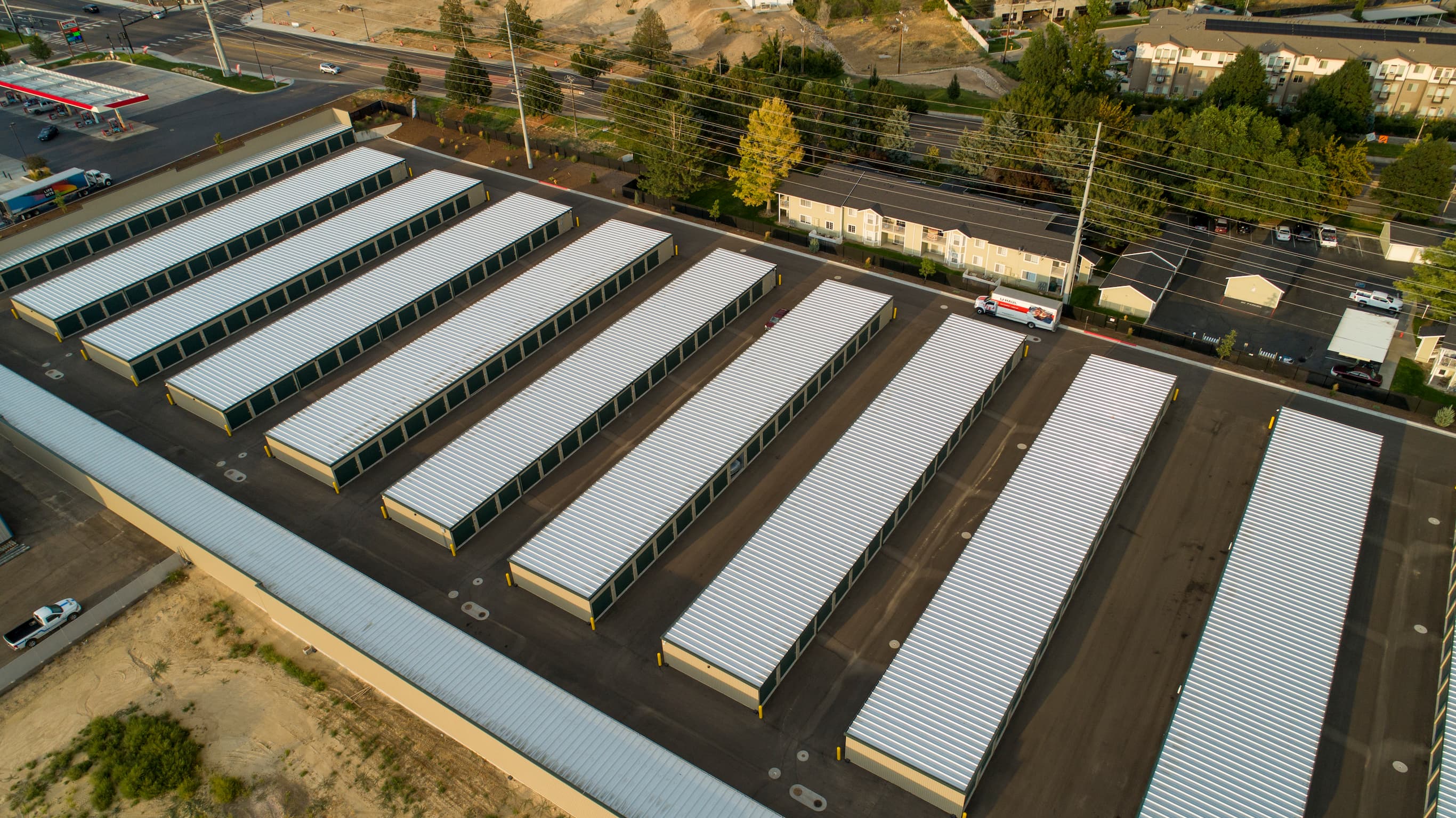
Searching for a self storage business for sale can feel straightforward at first. You visit a few commercial real estate websites, contact a broker, and wait for the right listing to appear.
That approach may uncover opportunities, but it limits your search to owners who have already decided to sell publicly.
A more productive strategy is to run two searches at the same time. The first tracks self-storage facilities that are actively listed. The second identifies facilities that fit your criteria and gives their owners a reason to begin a confidential conversation—even when the property is not officially for sale.
Here is how to build that search process from the ground up.
1. Decide What Kind of Self-Storage Business You Want
Before contacting brokers or facility owners, define what you are actually trying to buy.
Without clear acquisition criteria, it is easy to spend months reviewing opportunities that are too large, too small, too far away, or too dependent on improvements you are not prepared to make.
Your criteria should address several basic questions.
Choose a Geographic Area
Decide whether you are searching nationally, regionally, or within driving distance of your home or existing business.
A wider geographic search gives you more opportunities, but it may also require remote management, additional travel, or a local employee. A narrow search may be easier to manage but could produce fewer potential sellers.
Rather than identifying only one city, consider defining:
-
A group of counties
-
A metropolitan area and its surrounding communities
-
A maximum driving radius
-
Several states with similar operating characteristics
-
Small and midsized markets along a specific highway or growth corridor
Include secondary and rural markets when they fit your strategy. Some facilities are located outside the major commercial real estate markets and may receive less attention from buyers.
Set a Realistic Purchase Range
Separate the asking price from the total project cost.
Your total cost may include the real estate, operating business, closing expenses, repairs, security or gate upgrades, management software, working capital, and post-closing reserves.
An early conversation with a lender can help you understand what transaction size may be supportable based on your available cash, experience, credit profile, and the facility’s expected cash flow.
Define the Facility Profile
Determine whether you want:
-
Traditional drive-up storage
-
Climate-controlled storage
-
RV and boat storage
-
A mixed-use facility
-
An established, stabilized operation
-
A facility still in lease-up
-
A property with expansion land
-
An owner-managed facility
-
A facility with management already in place
-
One location or a small portfolio
Also decide whether the real estate must be included. Some opportunities involve the operating business and property together, while others involve a leasehold operation or real estate without all the operating assets.
Create a One-Page Buyer Profile
Summarize your criteria in a one-page document that you can send to brokers, owners, and referral sources.
Include your:
-
Target geography
-
Preferred purchase range
-
Facility type and size
-
Operating or management experience
-
Available equity range
-
Expected financing approach
-
Preferred closing timeline
-
Contact information
A clear buyer profile makes it easier for other people to recognize an opportunity that fits.
2. Use Both On-Market and Off-Market Search Methods
Your search should have two distinct tracks.
An on-market search focuses on properties and businesses that are publicly offered for sale. These opportunities are easier to find, but they may attract multiple buyers.
An off-market search focuses on facilities that are not currently listed. You identify suitable properties, research their ownership, and contact the owners directly to ask whether they would consider a sale.
Neither approach is automatically better.
A listed property may have organized financial records, a defined transaction process, and a motivated seller. An off-market opportunity may give you more time to build a relationship, but the owner may not have established a price, prepared financial records, or decided whether to sell.
The strongest search process uses both.
3. Search Public Listing Platforms More Effectively
Commercial real estate and business-for-sale websites are the most visible starting points.
Crexi1 and LoopNet2 maintain self-storage property categories, while BizBuySell3 includes storage facilities within its business and business-real-estate listings. Because these platforms organize opportunities differently, searching only one may cause you to miss relevant listings.
Use Several Search Terms
Do not search only for “self storage business for sale.” Sellers and brokers may describe the same type of property in different ways.
Try searches such as:
-
Self storage facility for sale
-
Mini storage for sale
-
Storage unit business for sale
-
Climate-controlled storage for sale
-
RV storage facility for sale
-
Boat storage business for sale
-
Storage portfolio for sale
-
Storage facility with expansion land
-
Owner-operated storage facility
-
Self storage real estate
-
Storage facility call for offers
Some listing categories also contain warehouses, moving companies, development land, portable storage businesses, and other properties that are not traditional self-storage facilities. Read the property description carefully rather than relying on the category alone.
Search by Map, Not Just by State
A statewide search may produce too many unrelated results.
Use map-based tools to search specific counties, highway corridors, or a radius around a target city. Repeat the search for neighboring communities because brokers may classify a facility under the closest recognizable market rather than its exact town.
Do Not Ignore Unpriced Listings
Some properties are marketed as “unpriced” or “call for offers.” That does not necessarily mean they are outside your range.
The broker may be collecting indications of interest, allowing the market to influence pricing, or conducting a formal offer process. Contact the broker and ask for the offering memorandum, bid date, financial summary, and seller’s transaction expectations.
Set Alerts and Review New Listings Regularly
Save multiple searches and turn on email alerts where available.
A simple routine may include:
-
Reviewing listing alerts as they arrive
-
Conducting a broader search once each week
-
Recording every relevant listing in a central pipeline
-
Saving the listing broker’s contact information
-
Tracking price changes and time on market
-
Revisiting listings that were withdrawn or did not close
Even when a listed facility is not right for you, the broker may know about another owner considering a sale.
4. Build Relationships With Self-Storage Brokers
A broker who regularly sells self-storage properties can become one of your most valuable search channels.
Start by reviewing active listings in your target markets. Note which agents repeatedly appear on self-storage transactions. Those brokers are more likely to know local owners, understand facility operations, and hear about potential sales before a formal listing is published.
Contact More Than One Broker
Do not rely on one brokerage relationship.
Build a list of brokers who cover:
-
Your target states
-
Your preferred facility size
-
Smaller owner-operated properties
-
Larger commercial real estate transactions
-
RV and boat storage
-
Rural or secondary markets
-
Portfolio transactions
A broker may specialize in a particular region or transaction size. Sending your criteria to several qualified brokers broadens your coverage.
Give Brokers Specific Information
Avoid saying only, “Let me know if you see a good storage deal.”
A more useful message would explain:
I am looking for an existing self-storage facility in Missouri, Arkansas, Kansas, or Oklahoma. My preferred range is 20,000 to 60,000 net rentable square feet, with the real estate included. I am open to stabilized or moderate value-add opportunities and would consider a purchase price between $1.5 million and $5 million, depending on cash flow and condition.
Specificity helps the broker determine whether an opportunity belongs in your pipeline.
Demonstrate That You Are Prepared
A broker will generally take your search more seriously when you can explain:
-
Your available equity
-
Your operating plan
-
Your relevant experience
-
Your financing strategy
-
Who will help evaluate the transaction
-
How quickly you can review an opportunity
You do not need a final loan approval before identifying a business. However, preliminary financing guidance can help show that your acquisition range is grounded in reality.
Ask Better Questions
When speaking with a broker, ask:
-
Are any owners in this market quietly considering a sale?
-
Are you preparing any listings that have not launched yet?
-
Have any recent listings been withdrawn without selling?
-
Are there owners who would consider an offer but do not want a broad marketing process?
-
Are there properties that did not meet another buyer’s criteria?
-
Which nearby markets receive less buyer attention?
-
What facility sizes are most likely to trade privately?
Remember that the listing broker usually represents the seller unless another arrangement has been established. Understand whom the broker represents before sharing sensitive information or relying on the broker for advice.
Sample Broker Introduction
Here's a sample broker introduction to personalize for your needs:
Subject: Self-storage acquisition criteria for [region]
Hello [Name],
I am looking to acquire an existing self-storage operation in [target area]. My preferred facility has approximately [range] net rentable square feet, includes the underlying real estate, and falls within a total project range of approximately [range].
I am open to both stabilized and value-add opportunities, provided the property has supportable operating history and a clear path to active management. I have attached a short buyer profile with additional information.
Please keep me in mind for active listings, upcoming assignments, or confidential opportunities that fit these criteria. I would also appreciate a brief introductory conversation about the markets you cover.
5. Use Industry Associations and Events to Meet Owners
Self-storage associations can help you move beyond anonymous online searches.
The national Self Storage Association maintains relationships with state and regional associations. Its events and educational programs bring together facility owners, operators, investors, service providers, and other industry professionals. Self Storage Association state associations
Look for:
-
State self-storage association meetings
-
Regional conferences
-
National trade shows
-
Owner and operator workshops
-
Educational seminars
-
Local networking events
-
Vendor-sponsored gatherings
The goal should not be to walk into an event asking every owner whether the business is for sale. Focus on learning the market and building real professional relationships.
A natural introduction might be:
I am looking to acquire and actively operate a self-storage facility in the region. I am especially interested in independent facilities between 25,000 and 60,000 square feet. I am here to learn more about the market and meet owners and service providers.
After the event, follow up with the people you met. Share your buyer profile and ask them to keep your criteria in mind.
6. Build Your Own Off-Market Facility List
An off-market search begins by identifying facilities that fit your criteria, whether or not their owners have expressed interest in selling.
This is not a one-time mailing campaign. It is a structured research and relationship-building process.
Step 1: Map Every Facility in the Target Area
Search Google Maps and Google using terms such as:
-
Self storage
-
Mini storage
-
Storage units
-
Climate-controlled storage
-
RV storage
-
Boat storage
Google Business Profiles can show a facility’s business name, location, website, phone number, hours, and other public information. Google Business Profile Help
Move through your target market in sections rather than searching only from the center of a city. Smaller facilities may appear under the name of a township, highway, or neighboring community.
Also search for older naming conventions. A property called “Smith Mini Warehouses” may not appear when you search only for modern self-storage branding.
Step 2: Create a Facility Database
Record each potential target in a spreadsheet or customer relationship management system.
Useful fields include:
-
Facility name
-
Street address
-
City, county, and state
-
Website
-
Public business phone number
-
Estimated facility type
-
Approximate unit count
-
Estimated rentable square footage
-
Climate-controlled units
-
RV or boat spaces
-
Expansion land
-
Current brand
-
Independent or institutional ownership
-
Legal property owner
-
Property-owner mailing address
-
Ownership date
-
Decision-maker name
-
Contact status
-
Last contact date
-
Next follow-up date
-
Notes
Do not wait until the database is perfect before beginning outreach. Start with the most promising facilities and improve the records over time.
Step 3: Use the Self-Storage Industry Code
The current Census classification for businesses primarily engaged in renting self-storage space is NAICS 531130: Lessors of Miniwarehouses and Self-Storage Units. That code can be useful when searching business databases, government datasets, chamber directories, and commercial prospecting tools. U.S. Census Bureau NAICS search4
Be aware that an industry-code search may not capture every facility. A mixed-use property or newly opened operation may be classified differently.
Step 4: Identify the Property Owner
The name on the facility sign may not be the legal owner of the real estate.
Search the county assessor or property-tax database using the facility’s street address. Depending on the jurisdiction, the record may show:
-
The property owner’s legal name
-
The tax mailing address
-
Parcel information
-
Assessed improvements
-
Recent ownership changes
-
Related parcels
The owner may be an individual, limited liability company, partnership, corporation, or trust.
Next, review the county recorder or land-record system where available. A deed can help confirm when the current owner acquired the property and whether multiple parcels are involved.
Step 5: Research the Ownership Entity
When the property is held by an LLC or corporation, search the applicable Secretary of State’s business-entity database.
That record may identify:
-
The entity’s legal status
-
Formation date
-
Principal office
-
Registered office
-
Registered agent
-
Managers, members, or officers, depending on the state
A registered agent is not always the owner or appropriate acquisition contact. Use the information to continue your research rather than assuming the agent is the decision-maker.
Cross-reference the entity with the facility website, local business directories, professional profiles, and other publicly available business information.
Step 6: Use Public Information Responsibly
Contact owners through legitimate business channels or addresses contained in public property and entity records.
Do not misrepresent your identity, pretend to be a customer, or pressure an employee to provide private owner information. If a facility manager answers the phone, explain that you have a confidential business inquiry for ownership and ask for the appropriate way to send it.
Honor requests not to be contacted again.
7. Prioritize the Most Relevant Off-Market Prospects
Not every facility deserves the same amount of research or outreach.
Create a basic scoring system based on the factors that matter to your acquisition plan.
For example, you might score each facility from one to five for:
-
Geographic fit
-
Estimated purchase-size fit
-
Facility type
-
Independent ownership
-
Apparent management model
-
Expansion potential
-
Ease of identifying ownership
-
Likelihood that you could actively operate it
-
Compatibility with your financing range
Several observable characteristics may justify moving a facility higher on your outreach list:
-
Long ownership history
-
Independent, single-location ownership
-
Limited online rental or payment capabilities
-
An owner-operated office
-
Underused land or undeveloped adjacent parcels
-
A facility that was previously listed
-
An absentee ownership mailing address
-
A property that appears to need operational modernization
-
A facility that does not fit the focus of a larger owner’s portfolio
These are not proof that an owner wants or needs to sell. Treat them as reasons to begin a respectful conversation, not as evidence of financial distress.

8. Contact Owners With a Personal, Low-Pressure Message
Generic mass mail usually sounds generic.
A better first message is brief, specific, and clear about why you are contacting that particular owner; such as this one:
Sample Owner Letter or Email
Subject: Confidential inquiry regarding [Facility Name]
Dear [Owner Name],
I am looking to acquire and actively operate a self-storage facility in [market]. During my search, I identified [Facility Name] as a property that appears to fit the type and location of business I am seeking.
I understand that the facility is not publicly listed for sale. I am writing to ask whether you would be open to a confidential conversation about a possible sale, either now or as part of your longer-term plans.
My interest is specific to self-storage, and I am prepared to discuss my background, acquisition criteria, and financing approach. There is no obligation, and I will respect your confidentiality.
Please feel free to contact me at [phone number] or [email address].
Do not tell an owner that the property looks neglected, poorly managed, outdated, or underperforming. Even when you see potential improvements, leading with criticism is unlikely to build trust.
Sample Phone Script
Hello, my name is [Name]. I am looking to acquire and operate a self-storage facility in the area. I am calling about [Facility Name].
I understand it is not listed for sale, but I wanted to ask whether ownership might be open to a confidential conversation about a sale now or in the next few years. If not, I completely understand.
If the answer is no, ask whether you may check back in the future. Record the owner’s preference and follow it.
Use a Reasonable Follow-Up Sequence
A practical sequence may include:
-
A personalized letter or email
-
A phone call approximately one or two weeks later
-
A brief second message if there is no response
-
A light follow-up several months later
Repeated weekly calls are unlikely to help. Ownership plans may change over several years, so consistent but respectful follow-up is generally more useful than aggressive contact.
9. Develop Referral Sources Who Hear About Sales Early
Many professionals regularly work with self-storage owners.
Potential referral sources include:
-
Commercial real estate attorneys
-
Accountants
-
Insurance professionals
-
Property managers
-
Self-storage consultants
-
Appraisers
-
Gate and access-control vendors
-
Roofing and construction contractors
-
Management software providers
-
Commercial lenders
-
Certified Development Companies
-
Local commercial real estate brokers
These professionals may be subject to confidentiality obligations and should not be asked to disclose private client information.
Instead, give them permission to forward your buyer profile to an owner who may be interested.
A useful request is:
I am not asking you to identify confidential clients. If an owner mentions succession planning or a possible sale, would you be comfortable sharing my buyer profile with that person?
Keep referral sources informed when your criteria change. A person who heard from you once two years ago may not remember your acquisition range today.
10. Track the Search Like a Sales Pipeline
A serious acquisition search can involve hundreds of properties and dozens of conversations.
Without a tracking system, owners get contacted twice, follow-ups are missed, and useful broker information disappears into email.
Use stages such as:
-
Identified
-
Ownership research in progress
-
Ready for contact
-
Initial contact sent
-
Follow-up due
-
Owner conversation completed
-
Not interested
-
Future follow-up
-
NDA signed
-
Financial information received
-
Under preliminary review
-
Letter of intent considered
-
Passed
Every record should have a next action and a next-action date.
An example weekly rhythm could be:
-
Add 20 to 25 facilities to the database
-
Research 10 property owners
-
Send five to 10 personalized messages
-
Complete outstanding follow-up calls
-
Speak with at least one broker or referral source
-
Review new and changed public listings
The exact numbers matter less than maintaining a consistent process.
11. Qualify an Interested Seller Before Investing Heavily
When an owner says they may consider selling, the goal of the first conversation is not to complete full due diligence.
It is to determine whether there is enough alignment to continue.
Ask:
-
Is the real estate included?
-
Does the same owner control the property and operating business?
-
Approximately how many units and rentable square feet are there?
-
What types of storage are offered?
-
What is the approximate current occupancy?
-
Is the facility owner-managed, remotely managed, or staffed?
-
How involved is the owner in daily operations?
-
Is there expansion land?
-
What major improvements have been completed?
-
What is prompting the owner to consider a sale?
-
What timing would the owner prefer?
-
Does the owner have a price expectation?
-
Is a broker or other adviser already involved?
-
Would the owner share financial information under an appropriate confidentiality agreement?
You do not need perfect answers during the first call. You do need enough information to determine whether the facility fits your location, size, budget, and operating plan.
12. Common Search Mistakes to Avoid
Waiting for the Perfect Listing
A narrow dependence on public listings leaves your search controlled by the inventory other people decide to market.
Continue monitoring listings, but build your own owner pipeline at the same time.
Sending the Same Message to Every Owner
A letter that refers to the facility by name and explains your specific interest is more credible than a postcard promising an immediate purchase of “any storage property.”
Assuming Off-Market Means Inexpensive
An off-market seller may expect a premium, may not understand current value, or may still be deciding whether to sell.
The absence of a public listing does not automatically make the property a bargain.
Leading With Price
You may not know enough about the property to offer a responsible price during the first conversation.
First establish what is included, obtain basic operating information, and understand the seller’s expectations.
Researching Forever Without Contacting Anyone
Facility research can become a way to avoid owner conversations.
Once you have confirmed the property, legal owner, and appropriate contact channel, make the initial approach. The owner—not the database—determines whether a conversation is possible.
A 30-Day Plan for Starting Your Search
Week 1: Define the Acquisition
Create your buy box, estimate your total project range, speak with an experienced lender, and prepare a one-page buyer profile.
Week 2: Build the On-Market Search
Create saved searches on commercial real estate and business-for-sale platforms. Identify brokers with active self-storage listings in your target markets and send them your criteria.
Week 3: Build the Off-Market List
Map the self-storage facilities in one target market. Research the legal owners of the first 25 to 50 properties and rank them by fit.
Week 4: Begin Outreach
Send personalized messages to the highest-priority owners. Follow up with brokers, attend or register for an industry event, and begin developing relationships with local referral sources.
At the end of the month, review which channels produced the most relevant conversations and repeat the process in the next market.
Prepare for Financing Before a Seller Says Yes
Finding an interested owner is only useful when the potential transaction fits your financial capacity.
The SBA 7(a) program can generally support eligible changes of ownership, real estate, equipment, and other qualifying business-acquisition costs. Participating lenders make the loans and work directly with borrowers; the SBA provides a guaranty to the lender rather than lending directly to the business owner.
Self-storage transactions can require careful eligibility and structure review because they involve both operating activity and income-producing real estate. Eligibility, equity requirements, loan terms, and eligible uses depend on the particular operation, ownership structure, borrower, and lender underwriting.
First Bank of the Lake is a nationwide SBA Preferred Lender with experience in business acquisitions, commercial real estate, and complex SBA structures. An early conversation can help a buyer establish a realistic acquisition range before approaching dozens of facility owners.
The Right Facility May Need to Be Found, Not Just Listed
Finding a self-storage business for sale takes more than watching new listings.
A focused buyer defines the acquisition, tracks public offerings, develops broker relationships, maps independent facilities, researches ownership, contacts owners respectfully, and follows up over time.
That process will not make every owner a seller. It will give you a larger and more organized field of potential opportunities—and a clearer path to recognizing the right one when a conversation begins.
Once you have established your acquisition criteria, talk with an SBA lending specialist about your estimated financing range. First Bank of the Lake can help you explore whether SBA financing may fit your self-storage acquisition plans, subject to SBA guidelines and lender underwriting.
Talk with a self-storage lending expert
Frequently Asked Questions
1. Where can I find self-storage businesses listed for sale?
Start with commercial real estate platforms, business-for-sale marketplaces, and self-storage brokers. Search several terms because listings may be categorized as self-storage real estate, mini storage, RV storage, warehouse property, or a business with real estate.
2. How do I find self-storage businesses that are not listed?
Map facilities in your target area, research the property owner through county records, identify the controlling business entity, and contact the owner through a legitimate business or public-record address. Keep the message personal, confidential, and low pressure.
3. How do I find the owner of a self-storage facility?
Begin with the county assessor’s property database. Search the facility address to identify the legal property owner and tax mailing address. If an LLC or corporation owns the property, search the state’s business-entity database and cross-reference the results with the facility’s website and other public business information.
4. Should I hire a broker to find a self-storage facility?
A broker can help identify listed and potential off-market opportunities, explain a local transaction process, and provide market context. Buyers should understand whom the broker represents and whether any buyer-representation agreement or fee applies.
5. What should I say to an owner whose property is not for sale?
Explain who you are, why the facility fits your search, and that you are interested in a confidential conversation. Do not assume the owner is distressed or criticize the operation. Give the owner an easy way to decline.
6. How often should I follow up with an owner?
Follow up once after the initial message and again only at reasonable intervals. Some owners may not be ready today but could consider a sale later. Respect any request not to be contacted again.
7. Do I need financing before contacting sellers?
You do not generally need final financing approval because a lender will need information about the specific acquisition. However, preliminary guidance can help you define a realistic purchase range and communicate more credibly with sellers and brokers.
Why Work with First Bank of the Lake
First Bank of the Lake helps business owners nationwide find the financing they need to grow, expand and invest in what comes next. Our experience has made us one of the country’s leading SBA lenders. Since 2023, First Bank of the Lake has ranked among the top 1% of SBA 7(a) lenders, placing 15th nationwide by approval amount and have also ranked as the third most active SBA franchise lender by lending volume, according to the U.S. Small Business Administration.
Founded in 1985, we combine national lending capabilities with the personal attention you would expect from a community bank. Our knowledgeable team takes the time to understand your goals, walk you through your options and support you at every step.
If you are considering financing for your business, we would be happy to answer your questions. Call us at (888) 828-5689 or complete the form above to start the conversation. You can also visit our website or connect with us on Facebook and LinkedIn.
1 https://www.crexi.com/search/self-storage-properties-for-sale
2 https://www.loopnet.com/biz/storage-facilities-and-warehouses-for-sale/
3 https://www.bizbuysell.com/storage-facilities-and-warehouses-for-sale/2/
4. https://www.census.gov/naics/?details=53113&input=53113&year=2022