
%20(1).svg "fdic-digital-sign-white (4) (1)")


How to move beyond population reports and determine whether a particular market can support the facility you are considering
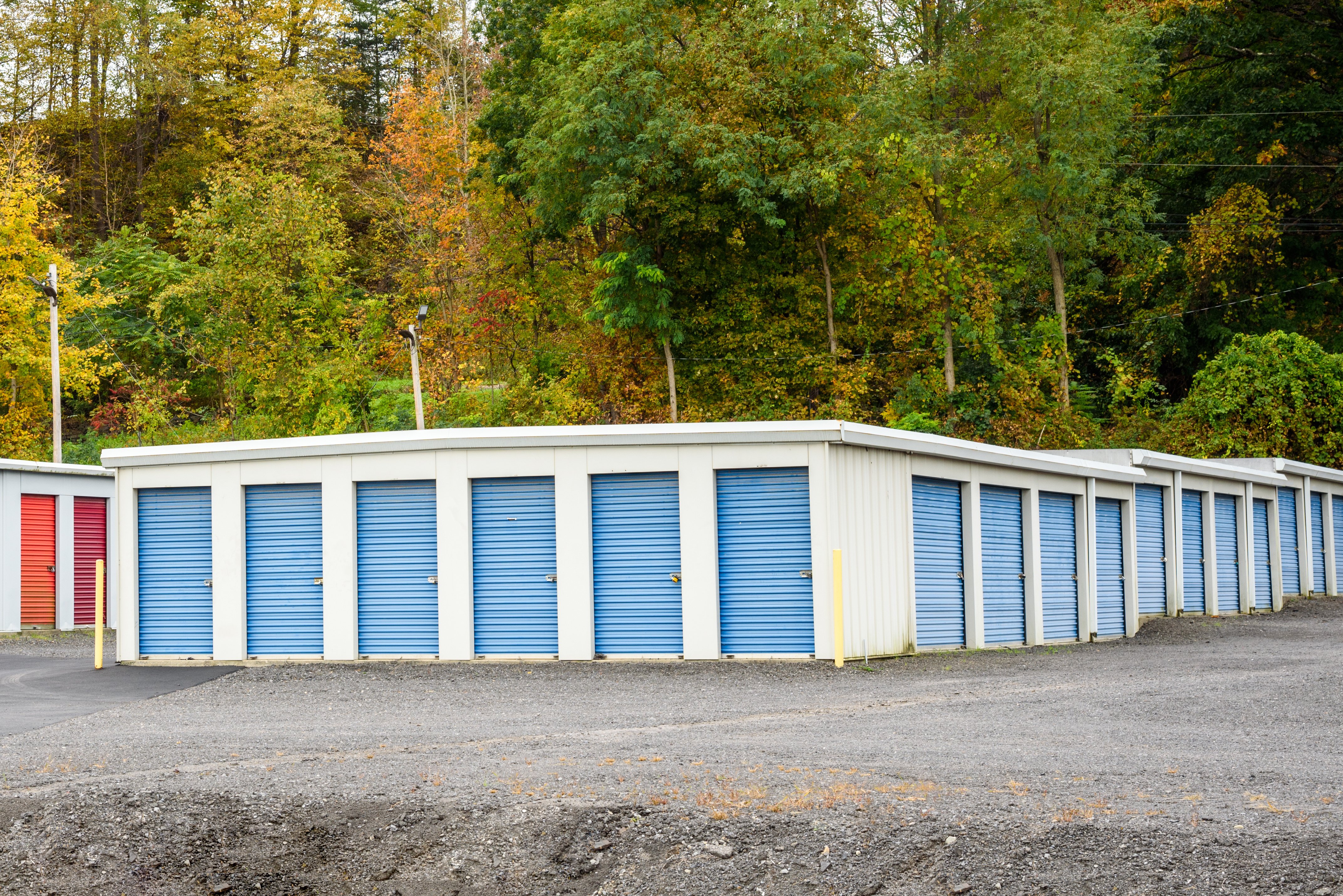
Self-storage spent years earning a reputation as a resilient commercial real estate sector.
Then the market got more complicated.
By 2026, many storage operators were dealing with softer rental rates, uneven demand, higher financing costs, and new supply that affected some markets much more than others. At the same time, construction activity was slowing, setting up a potentially different supply environment heading into 2027.
So, is self-storage still a good investment in 2027?
The answer depends much less on the asset class as a whole and much more on the specific facility, market, purchase price, financing structure, and operating plan.
That is also how lenders are approaching storage deals.
A lender is not underwriting the reputation of self-storage. The lender is underwriting your facility and asking a much more practical question:
Does this particular property generate—or have a reasonable path toward generating—enough sustainable cash flow to support the proposed debt?
For buyers, developers, and existing operators considering a transaction in 2027, understanding what lenders are watching can help separate an attractive opportunity from a deal that only looks good on paper.
What 2026 Told Us About the Self-Storage Market
The storage market entered 2026 in a period of adjustment.
Yardi Matrix1 described the expected recovery as gradual and uneven, with stronger performance more likely in markets where supply was limited and housing conditions improved. As the year progressed, advertised rental rates showed seasonal month-to-month improvement, but year-over-year rent growth remained negative across most of the major markets Yardi tracked.
In June 2026, for example, national advertised asking rates increased from the prior month, while annual rates remained negative in 26 of the 30 largest markets for both major unit categories.
That matters because storage performance is highly local.
A national average can tell you where the broader industry has been. It cannot tell you whether a particular three-mile or five-mile trade area has too many units, strong population growth, limited development, or enough demand to support another facility.
At the same time, the supply picture began moving in a potentially constructive direction.
Yardi reported in August 20262 that new U.S. self-storage supply was projected to decline by almost 19% for full-year 2026 compared with 2025. Construction starts at midyear were also 19.6% below the same point in 2025, supporting an expectation that 2027 deliveries could fall further.
That does not automatically make 2027 a strong year for every storage investment.
It does suggest that the conversation is shifting.
Instead of asking only how much new supply is coming, investors and lenders are increasingly interested in where supply is declining, whether demand is recovering, and which properties can hold their own while those forces rebalance.
So, Is Self-Storage Still a Good Investment?
Self-storage can still represent an attractive business and real estate opportunity in 2027.
But the answer is not simply “yes.”
A good self-storage investment generally needs the same things lenders want to see in a financeable storage deal:
- Sustainable customer demand
- Defensible rental rates
- Reasonable competition
- A credible operating plan
- Adequate cash flow
- Appropriate leverage
- Sufficient borrower liquidity
- A purchase price supported by the facility’s economics
One of the biggest lessons from the recent market cycle is that a good industry does not make every facility a good investment.
Storage investors who bought based on aggressive rent growth, rapid lease-up assumptions, or very low financing costs have had a different experience from investors who underwrote more conservatively.
In 2027, lenders are likely to continue rewarding the second approach.
1. Lenders Are Watching Occupancy—but Not Occupancy Alone
A storage facility that is 90% occupied may sound healthy.
That number is useful, but lenders want to know what sits behind it.
How much are customers actually paying?
How many units are receiving promotions or discounts?
How often are customers delinquent?
How has occupancy moved over the past 12, 24, or 36 months?
And how does the facility compare with competing properties?
A facility can report strong physical occupancy and still have weaker-than-expected revenue if rents are low or discounting is heavy.
That is why lenders generally look at several measures together rather than treating one occupancy figure as proof of performance.
What borrowers should be prepared to provide
For an acquisition or refinance, expect a lender to look closely at historical operating statements, rent rolls, occupancy trends, rental rates, and expenses.
If you believe the property has significant upside, show exactly where you expect that upside to come from.
“Raise rents after closing” is not much of an operating strategy by itself.
A more credible explanation might identify current in-place rents, comparable facilities, expected customer churn, timing of increases, and how the projected revenue change affects overall cash flow.
2. Rental Rate Assumptions Are Getting More Scrutiny
One of the clearest themes from 2026 was pressure on advertised rents.
Yardi’s June 2026 data showed advertised rates for non-climate-controlled units down 1.6% year over year in 26 of the top 30 metros, while climate-controlled rates were down 1.8% across the same number of markets.
That does not mean every facility experienced declining revenue.
It does mean lenders have good reason to question projections that assume substantial rental growth simply because a new owner takes over.
If your underwriting assumes 5%, 10%, or 15% higher rents, expect the lender to ask why.
What do competing facilities charge?
Are those advertised rates or effective rates?
What occupancy do the competitors have?
How quickly can customers switch facilities?
Has the market historically supported the proposed pricing?
For 2027 transactions, conservative revenue assumptions can be more persuasive than an aggressive model designed to maximize a theoretical return.
3. New Supply May Be Slowing, but Lenders Still Care About Your Market
The national development story became more encouraging during 2026.
Yardi’s August forecast projected approximately 52.93 million net rentable square feet of new supply for full-year 2026 and a further decline to approximately 45.25 million square feet in 2027.
Earlier Q2 forecasting similarly showed the supply trajectory declining through 2028.
For existing owners, less construction can eventually reduce competitive pressure.
For developers, it can create opportunity in markets where demand remains strong and competitors have difficulty bringing new projects online.
But national supply is not the number that underwrites your loan.
Your lender will care about what is happening around your property.
A facility in a market with limited new development may have a very different outlook from one facing several large competitors scheduled to open within the next 12 months.
Expect questions such as:
- How much storage already exists in the trade area?
- How many projects are under construction?
- How many additional facilities are planned?
- What barriers to entry exist?
- Is population growing?
- Are households moving into or out of the area?
- What are competing facilities charging?
- Are existing competitors full?
For storage financing, ZIP code and trade-area economics can matter much more than national headlines.

4. Housing Activity Still Matters
People use storage for many reasons: moves, downsizing, divorce, business inventory, home renovation, military deployment, college, family changes, and simply having too much stuff.
Housing activity is nevertheless an important demand driver.
When fewer households are moving, one traditional source of new storage customers becomes weaker.
Yardi identified subdued home sales as one of the factors constraining self-storage demand during 2026. It also noted that elevated long-term rates continued to suppress single-family home transactions.
A lender considering a storage transaction in 2027 may therefore look at more than population totals.
Household formation, housing turnover, apartment construction, residential development, migration, and local employment can all help explain future demand.
If your investment thesis depends on significant customer growth, be prepared to show where those customers are expected to come from.
5. Cash Flow Matters More Than the Story
Storage deals often come with a story.
“This owner has not raised rents.”
“The facility has almost no digital marketing.”
“Occupancy could easily reach 90%.”
“The property needs professional management.”
“We can add climate-controlled units.”
Some of those opportunities may be real.
But lenders finance cash flow, not narratives.
For an existing facility, historical earnings generally carry significant weight because they show what the asset has actually produced.
If your plan relies on improved performance after closing, the lender will usually want to understand the assumptions, timing, costs, and risks involved.
A lender may ask:
What happens if the improvements work, but take twice as long as expected?
That is the kind of question a buyer should be asking too.
A good investment should not necessarily require everything to go exactly right from the first day after closing.
6. Debt Service Coverage Is a Critical Number
Once financing enters the picture, the property’s income has another job: servicing debt.
Lenders generally analyze whether cash flow provides sufficient coverage for required loan payments.
The exact methodology and required coverage can vary by lender, program, borrower, and transaction.
But the principle is straightforward.
If the property generates $1 of cash flow for every $1 of required debt payments, there is essentially no room for operating surprises.
A decline in occupancy, unexpected repair, insurance increase, or lower-than-projected rent could quickly create pressure.
That is why lenders generally want a cushion.
For buyers, this is worth considering independently of what the lender will permit.
The maximum loan amount available is not always the amount that creates the healthiest investment.
7. Higher Financing Costs Changed the Math
The low-rate environment that supported commercial real estate valuations earlier in the decade is no longer the appropriate starting point for underwriting.
By mid-2026, CBRE had revised its broader commercial real estate outlook to expect cap rates to remain largely stable during the year because benchmark interest rates were higher than previously anticipated. CBRE emphasized that property income would be particularly important for returns in that environment.
Self-storage investors feel the same basic mathematics.
When debt costs more, a facility needs enough earnings to support that debt.
Higher financing costs can affect:
- Maximum loan proceeds
- Debt service coverage
- Investor returns
- Property values
- Construction feasibility
- Refinancing options
This does not mean good deals disappear.
It means price discipline matters.
A facility purchased at a price supported by current operations may offer a very different risk profile from the same facility purchased based on aggressive future income.

8. Lenders Are Looking Closely at Purchase Price
Buyers sometimes begin with the question:
How much will the bank lend?
A lender may begin somewhere else:
What is this property actually worth based on sustainable performance?
Purchase price, appraisal, cash flow, and loan structure are related, but they are not interchangeable.
A seller can ask any price.
That does not necessarily mean the property’s cash flow supports that price or that an appraisal will reach the same conclusion.
If a buyer is paying a premium because of expected future upside, the lender may not give full credit to improvements that have not happened yet.
That can lead to a larger equity requirement than the buyer originally expected.
For 2027 storage buyers, negotiating the right acquisition price may be as important as finding the right financing.
9. Liquidity Can Matter Just as Much as the Down Payment
Coming up with the required equity does not necessarily mean you are sufficiently capitalized.
Lenders may also consider what remains after closing.
Storage properties can require funds for repairs, payroll, utilities, taxes, insurance, marketing, technology, security, deferred maintenance, and other expenses.
A property in lease-up may need additional support before operating cash flow reaches the expected level.
Construction projects have even more potential for changing costs and timing.
A lender may therefore ask:
After you put your equity into this transaction, how much financial capacity remains?
That is not merely a lender concern.
Investors should be asking the same question.
Putting every available dollar into the acquisition can leave very little margin when reality differs from the original spreadsheet.
10. Sponsor and Operator Experience Still Count
Storage can look deceptively simple from the outside.
Build boxes. Rent boxes. Collect monthly payments.
Actual operations involve pricing, marketing, customer acquisition, delinquencies, auctions, security, maintenance, technology, staffing decisions, expense control, insurance, and local competition.
An experienced operator may have a better understanding of how those pieces interact.
That does not mean a first-time storage investor cannot obtain financing.
It does mean the lender may look more closely at the borrower’s broader business experience, management plan, outside support, liquidity, and assumptions.
If this is your first storage project, be ready to answer:
- Who will operate the facility?
- How will pricing be managed?
- What software will be used?
- How will customers find the property?
- Who manages delinquencies and collections?
- Is management onsite, remote, or hybrid?
- What experience does the borrower bring from other businesses or real estate?
A credible operating plan can carry significantly more weight than saying storage is a “passive” business.
11. Development Deals Face a Higher Bar
A ground-up facility is not the same transaction as buying a mature property.
There is no established operating history.
Instead, the financing depends heavily on assumptions about construction cost, timing, market demand, rental rates, lease-up, and eventual stabilization.
The slowdown in new construction may eventually create opportunities for developers in certain undersupplied markets. Yardi’s Q3 2026 forecast indicated that construction starts and future deliveries were moving lower nationally.
But a shrinking national pipeline does not automatically justify a new facility.
Lenders will still want to understand:
- Current supply
- Planned competing projects
- Population and household growth
- Construction budget
- Contractor experience
- Contingencies
- Borrower experience
- Available liquidity
- Lease-up assumptions
- Projected stabilized cash flow
The question is not “Is storage construction slowing?”
It is:
Does this market need this facility at this location at this cost?
12. Refinance Risk Deserves Attention
Not every storage investment begins and ends with the original loan.
Borrowers should consider what happens at maturity.
If your investment plan depends on refinancing a short-term loan after substantially increasing property value, that future refinance is another assumption.
What happens if interest rates remain higher than expected?
What happens if the appraisal does not increase as much as projected?
What if occupancy takes longer to stabilize?
A strong financing structure should consider the next capital event rather than assuming favorable refinance conditions will automatically be available.
This is particularly important for value-add and development transactions.
What Could Make Self-Storage Attractive in 2027?
There are reasons investors continue to pay attention to the sector.
One potentially positive factor is the slowdown in new development.
Yardi’s 2026 forecasts point toward fewer deliveries in 2027 and further supply moderation after that. If demand improves while new construction continues to slow, some markets could experience a healthier supply-demand balance.
Storage can also offer operational opportunities that are not entirely dependent on broad property appreciation.
An owner may be able to improve revenue management, marketing, tenant experience, expense control, unit mix, technology, or ancillary services.
But those opportunities should be evaluated property by property.
The investment case becomes stronger when the buyer can explain both:
why this market needs the facility and why this operator can run it successfully.
What Could Make a Storage Deal Riskier in 2027?
Lenders are likely to be more cautious when several risk factors show up together.
For example, a transaction may deserve additional scrutiny when it involves high nearby supply, declining rental rates, aggressive revenue projections, limited borrower liquidity, high leverage, little operating experience, and a purchase price dependent on rapid future growth.
One issue by itself may be manageable.
Several issues stacked on top of each other can materially change the risk.
That is why investors should resist evaluating a storage property based on a single number such as occupancy, price per square foot, or cap rate.
The complete story matters.
Can SBA Financing Be Used for Self-Storage?
SBA financing may be an option for qualifying self-storage transactions, depending on the business model, project, borrower, ownership structure, use of proceeds, and applicable SBA requirements.
SBA 7(a) financing can provide flexibility for eligible business purposes, while SBA 504 financing is generally focused on qualifying long-term fixed assets such as real estate, construction, improvements, and certain equipment.
One important distinction: SBA financing is generally intended to support qualifying operating businesses, not passive real estate investments.
A borrower considering SBA financing for self-storage should have the specific operating and ownership structure reviewed by an experienced SBA lender rather than assuming that every storage property qualifies.
Eligibility, equity requirements, terms, collateral, and structure depend on the transaction and are subject to SBA guidelines and lender underwriting.
Questions to Ask Before Buying a Self-Storage Facility in 2027
Before deciding whether a storage opportunity is a good investment, ask questions that go beyond the offering memorandum.
- What has occupancy actually been over the last several years?
- How have effective rental rates changed?
- How much discounting is required to attract new customers?
- What new facilities are coming into the market?
- How does local supply compare with demand?
- What assumptions support the seller’s projected income?
- What expenses are likely to increase after acquisition?
- How much capital will remain after closing?
- Does current cash flow support the proposed debt?
- What happens if lease-up or rent growth takes longer than expected?
- What improvements are truly necessary?
- How dependent is the return on a future sale or refinance?
- Who will operate the facility?
- If using SBA financing, does the operating structure appear eligible?
If the deal still works after asking the difficult questions, you are getting closer to an investment thesis a lender can understand.
The 2027 Storage Opportunity Is About Selectivity
The question is not whether self-storage is universally a good or bad investment in 2027.
It is whether the right storage facility, in the right market, at the right price, with the right financing and operating plan can produce sustainable results.
The 2026 market offered reasons for both caution and optimism.
Rental-rate pressure and uneven demand reminded investors not to depend on constant growth. At the same time, slowing construction could gradually improve the supply picture in some markets heading into 2027.
For lenders, that puts the focus back where it belongs: on fundamentals.
First Bank of the Lake is a nationwide SBA Preferred Lender with experience financing commercial real estate, acquisitions, construction, and complex SBA transactions.
If you are considering buying, developing, expanding, or refinancing a self-storage facility, an early lender conversation can help you understand how the project’s cash flow, market, equity, and financing structure may be viewed.
Talk with an SBA lending specialist to explore whether SBA financing fits your self-storage investment plans.
Connect with a Self-Storage Lending Specialist
Frequently Asked Questions About Self-Storage Investing in 2027
1. Is self-storage still profitable in 2027?
Individual self-storage facilities can be profitable, but profitability varies significantly by market, property, debt structure, operating performance, competition, and purchase price.
The national sector does not determine the economics of an individual facility.
Investors should evaluate actual and projected cash flow rather than assuming storage will produce a particular return.
2. Are self-storage rents going up or down?
The answer depends on the market.
During 2026, national advertised asking rents showed seasonal month-over-month improvement at times while remaining below prior-year levels across most major metros tracked by Yardi Matrix.
Investors should use current local rental and occupancy information rather than relying solely on national averages.
3. Is there too much self-storage supply?
Some markets have experienced substantially more development pressure than others.
Nationally, construction activity slowed during 2026. Yardi forecast a decline in new deliveries for 2027 as construction starts moved lower.
That makes local pipeline analysis especially important. A national slowdown does not eliminate oversupply in an individual market.
4. What do banks look at when financing a storage facility?
Depending on the transaction, lenders may evaluate historical and projected cash flow, occupancy, rental rates, expenses, local supply and demand, appraisal, borrower liquidity, equity, experience, creditworthiness, collateral, and the proposed loan structure.
Construction and lease-up transactions generally require additional analysis.
5. How much money do I need to put down on a self-storage property?
There is no universal down payment.
Required borrower equity depends on the lender, financing program, property, borrower, transaction type, collateral, and overall risk.
For certain SBA transactions, equity may often begin around 10%, but requirements can be higher depending on the circumstances and applicable SBA rules.
6. Is buying an existing storage facility safer than building one?
The two transactions have different risks.
An existing facility provides operating history that can help investors and lenders evaluate actual performance. A development project lacks that track record and relies more heavily on assumptions about construction, demand, rental rates, lease-up, and stabilization.
However, an existing facility can still be a poor investment if the purchase price, market, condition, or financing structure does not make sense.
7. The 2027 Storage Opportunity Is About Selectivity
The question is not whether self-storage is universally a good or bad investment in 2027.
It is whether the right storage facility, in the right market, at the right price, with the right financing and operating plan can produce sustainable results.
The 2026 market offered reasons for both caution and optimism.
Rental-rate pressure and uneven demand reminded investors not to depend on constant growth. At the same time, slowing construction could gradually improve the supply picture in some markets heading into 2027.
For lenders, that puts the focus back where it belongs: on fundamentals.
First Bank of the Lake is a nationwide SBA Preferred Lender with experience financing commercial real estate, acquisitions, construction, and complex SBA transactions.
If you are considering buying, developing, expanding, or refinancing a self-storage facility, an early lender conversation can help you understand how the project’s cash flow, market, equity, and financing structure may be viewed.
Why Work with First Bank of the Lake
First Bank of the Lake helps business owners nationwide find the financing they need to grow, expand and invest in what comes next. Our experience has made us one of the country’s leading SBA lenders. Since 2023, First Bank of the Lake has ranked among the top 1% of SBA 7(a) lenders, placing 15th nationwide by approval amount and have also ranked as the third most active SBA franchise lender by lending volume, according to the U.S. Small Business Administration.
Founded in 1985, we combine national lending capabilities with the personal attention you would expect from a community bank. Our knowledgeable team takes the time to understand your goals, walk you through your options and support you at every step.
If you are considering financing for your business, we would be happy to answer your questions. Call us at (888) 828-5689 or complete the form above to start the conversation. You can also visit our website or connect with us on Facebook and LinkedIn.
1 https://www.yardi.com/news/press-releases/yardi-matrix-quarterly-forecast-projects-self-storage-supply-downturn/
2 https://www.yardi.com/news/press-releases/yardi-matrix-quarterly-forecast-projects-self-storage-supply-downturn/