
%20(1).svg "fdic-digital-sign-white (4) (1)")



If you are exploring the purchase of a clinic, figuring out how to value a veterinary practice is often one of the first major questions you will ask. You want to make a fair offer, but you also need to ensure the business can support its own debt.
It is important to understand that the purchase price and the true value of a practice are not always the same thing. The price is simply what you and the seller agree on. The value is what the business is actually worth based on its ability to generate consistent cash flow after you take over.
Before making an offer, buyers need to understand exactly what they are paying for. You must look past top-line revenue and dig into the core components that drive profitability. Here is a breakdown of veterinary practice valuation and how to approach your purchase with confidence.
What Are You Actually Buying in a Veterinary Practice Acquisition?
When you buy a veterinary practice, you are acquiring a mix of hard assets and intangible value. Hard assets include things you can physically touch or clearly quantify. This generally includes real estate (if you are buying the building), medical equipment, cages, surgical tools, and inventory.
However, hard assets usually make up a small portion of the veterinary practice purchase price. The bulk of what you are buying is intangible value. You are purchasing established client relationships and the habits of pet owners who regularly bring their animals to that specific location.
You are also acquiring staff stability and reliable referral sources from other local businesses or specialists. Together, these intangible elements make up the goodwill and reputation of the clinic. This is what actually generates revenue, and it is why understanding goodwill in a veterinary practice sale is so critical.
How a Veterinary Practice Is Typically Valued
There are several ways to approach a veterinary practice valuation. Often, buyers and brokers will look at a revenue multiple approach. This method takes the total annual collections of the clinic and multiplies it by an industry-standard percentage to find a baseline value.
While simple, the revenue multiple approach ignores profitability. That is why lenders and experienced buyers typically prefer the EBITDA multiple approach. EBITDA stands for Earnings Before Interest, Taxes, Depreciation, and Amortization. This method looks at the actual cash generated by the business and applies a multiple to that number, giving a much clearer picture of financial health.
An asset-based valuation might also be used, though usually only for clinics that are closing or underperforming. In this case, you are just valuing the equipment and inventory. Ultimately, no single method tells the full story, which is why a comprehensive review of the clinic's finances is always necessary.
How Goodwill Is Treated in a Veterinary Practice Sale
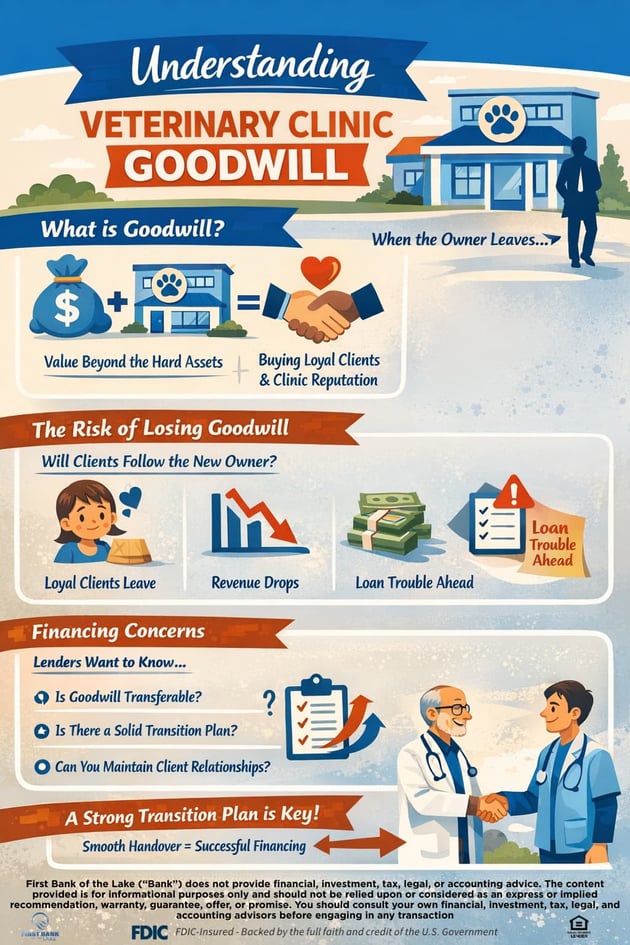
Goodwill is the premium you pay above the value of the hard assets. In a veterinary acquisition, goodwill means you are buying the likelihood that clients will continue to return after the current owner leaves. It is the monetary value of the clinic's good name.
When you apply for financing, lenders care deeply whether this goodwill is actually transferable to you. If clients are only loyal to the selling doctor, that goodwill might vanish the moment they retire. If the revenue leaves, you will struggle to repay the loan.
Because it is an intangible asset, goodwill can sometimes become harder to finance if the transition plan is weak. Lenders generally want to see a clear path showing how the seller will help transfer those relationships to you.
Why Historical Collections Do Not Always Equal Transferable Value
A practice might have fantastic historical collections, but that does not guarantee those numbers will transfer to you. Seller-driven production is a major factor. If the retiring owner performs 80% of the surgeries, you have to ask yourself if you or an associate can match that output.
Procedure mix concentration can also skew the value. If the clinic relies heavily on a specialized orthopedic procedure that you do not perform, that revenue will drop.
Additionally, key referral-source dependence should be evaluated. For example, if a local shelter refers most of its business to the clinic primarily because the seller has a close personal relationship with the shelter, that referral stream may not continue after a change in ownership. Similarly, if client loyalty is tied mainly to one doctor, that concentration risk should be considered in the valuation.

What Buyers Need to Know About Normalized Cash Flow
When you look at a seller's tax returns, you are looking at reported earnings. However, reported earnings are only the starting point. To understand the true cash flow, you must calculate the normalized cash flow, which adjusts the numbers to reflect what the business will look like under your ownership.
Owner compensation adjustments are the most common change. If the current owner pays themselves at a rate above or below market, you must adjust that figure to match what you will actually pay yourself or a replacement doctor.
You will also look for one-time expenses, such as a major facility repair, that do not occur every year. The importance of legitimate add-backs cannot be overstated. By adding these non-recurring or personal expenses back into the profit pool, you get a much clearer view of the clinic's actual earning power.
Red Flags That May Affect Practice Value
As you review the financials, keep an eye out for warning signs. Revenue concentration around the seller is a big one. If the clinic has three doctors but the owner generates the vast majority of the income, the business is highly vulnerable to the owner's departure.
Weak associate production is another concern. It may indicate that the associates are not well-trained, or that the owner is hoarding all the high-value cases. Poor staff retention trends can also signal a toxic workplace culture, which is expensive and time-consuming to fix.
Inconsistent margins from year to year suggest a lack of cost control. Finally, if there is no clear transition plan for the owner to introduce you to the community, the risk of client attrition spikes dramatically.
How to Build a Retention-Adjusted View of Value
To protect yourself, you should build a retention-adjusted view of the clinic's value. You must generally assume some level of client attrition. It is entirely normal for a small percentage of clients to leave when a practice changes hands.
Next, adjust doctor productivity expectations. You may not be as fast as a doctor who has been practicing in that specific building for thirty years.
You should also add post-close marketing support to your budget to help retain existing clients and attract new ones. By doing this, you can stress test the purchase price against the actual transferability of the cash flow. This ensures you only pay for the revenue that is likely to stay.
Understanding Transferable Goodwill
Questions to Ask Before You Agree on Price
Before you sign a Letter of Intent, you need clear answers from the seller. Ask exactly what part of the revenue is tied directly to their personal production. You need to know how big the shoes you are trying to fill are.
Ask how much of the value is tied up in hard assets versus goodwill. This will impact your financing and your tax strategy.
You must also understand what assumptions support the asking price. Is the seller assuming rapid growth, or are they basing it strictly on past performance? Finally, ask what changes after the close. Knowing what vendor contracts or staff salaries might shift will help you project your future costs accurately.
Final Thoughts
Buying an existing clinic is an exciting step, but remember that buying a practice is not just buying history. You are buying the business's future earning potential.
The best valuation work focuses firmly on what survives the handoff. By understanding cash flow, goodwill, and how to spot red flags, you can negotiate a fair price and set yourself up for long-term success.
Once you have a handle on the valuation, the next step is diving deep into the numbers. Learn how to validate veterinary practice cash flow during the underwriting process, and explore how to structure a veterinary practice purchase so that the deal works for both you and your lender.
Talk to a Veterinarian Practice Lending Specialist
Why Work with First Bank of the Lake
The friendly financial experts at First Bank of the Lake offer SBA loans designed with the needs of our customers in mind. We have financed more than $2 billion in SBA loans since 2020 and were ranked the 15th-largest SBA lender in the United States since 2023. Since our founding in October 1985, we have offered outstanding customer service and the best financial options for customers’ needs. Today, First Bank of the Lake offers loans for business enterprises across the United States. To learn more about our bank or learn more about SBA loans, visit our website or check us out on Facebook or LinkedIn. Our friendly and knowledgeable staff members will be happy to discuss your loan options with you and to help you achieve success in the medical industry. Please contact us at (888) 828-5689 or fill out the form below to get your business loan questions answered today!